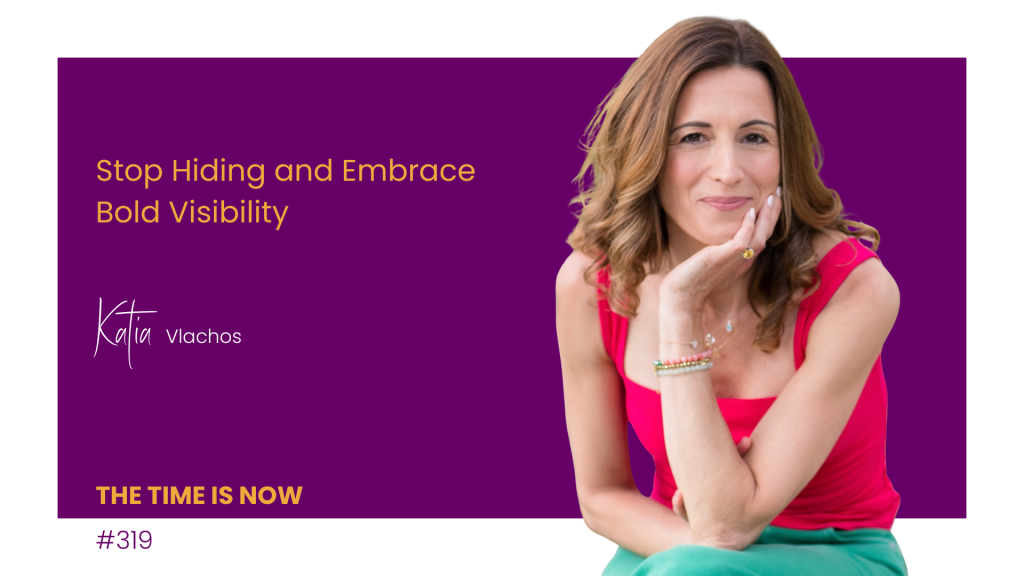
Stop Hiding and Embrace Bold Visibility – with Katia Vlachos
Listen on your podcast app:




Resources Of This Episode:
Want support refining your messaging so it aligns with your business and attracts your ideal clients? Schedule a free consultation call here.
Find Katia Vlachos Online:
Summary Of This Episode:
Chapters:
[01:11] Why Visibility Feels So Risky for Entrepreneurs
[02:04] Meet Katia Vlachos and Her Journey to Bold Visibility
[05:48] The First Steps to Breaking Out of Your Cage
[09:19] Balancing Privacy and Authentic Storytelling
[11:42] Managing Public Reactions and Judgment
[13:02] The Hidden Benefits of Embracing Visibility
[14:31] Identifying and Challenging Your Visibility Fears
[17:49] Responding to Criticism with Confidence
[20:03] Building a Business Around Your Book’s Mission
[22:34] From Vision to Implementation in Business
[25:16] Knowing When to Invest in Strategy and Support
[26:13] Finding Your Voice and Rhythm on Social Media
[28:46] How Katia Helps Women Get Uncaged
[31:08] Recognizing the Cage You Didn’t See
You don’t struggle with visibility because you lack value.
You struggle because showing up feels risky — and that fear of visibility can quietly hold you back for years.
What if your hesitation isn’t about strategy… but about invisible cages you’ve been living in?
In this powerful conversation, I sit down with Katia to explore what it really takes to reclaim your voice, embrace bold visibility, and share your truth — even when it feels uncomfortable.
Katia opens up about writing her deeply personal memoir Uncaged, navigating public criticism, going viral (including the haters), and building a business rooted in alignment instead of approval.
If you’ve ever held back your message out of fear of judgment, this episode will give you the clarity and courage to step forward — not for ego, but for impact.
“Visibility isn’t about you. It’s about who you’re here to serve.”
Katia Vlachos is a reinvention coach, speaker, and bestselling author. Through her book Uncaged: A Good Girl’s Journey to Reinvention, she shares her own transformation journey and the courage it took to divorce and start her life from scratch. Her work has been featured in The New York Times, Financial Times, Harvard Business Review, Forbes, BBC Radio, and many international outlets. She helps accomplished women break free from invisible rules of perfection and approval so they can reconnect with their voice, their worth, and their full potential.
What you will learn:
- How to spot the invisible “cage” keeping you and your business small
- How to balance privacy with sharing your authentic story and truth
- How to handle fear and criticism without shrinking your voice or visibility
- How working on her message together transformed her book into a thriving business
Find this episode on Youtube:
Enjoyed this episode? Please leave a review
Please leave a review or a comment to help me reach more people who need to hear this. Choose your favorite podcast app:
Transcript
The time is now episode 319.
Katia Vlachos:One thing about visibility I wish people knew
Katia Vlachos:is that it's not about you.
Katia Vlachos:It's about who you're here to serve, communicate with, connect with, add value.
Katia Vlachos:I think that makes the whole feasibility experience much less daunting or
Katia Vlachos:threatening and much more approachable and, and even fulfilling and rewarding.
Amel Derragui:Welcome to the Time is now the podcast for mission-driven
Amel Derragui:solopreneurs ready to take action and go from invisible to in demand.
Amel Derragui:I am your host, Emel Regi.
Amel Derragui:My mission is to help you cut through the noise, get crystal clear on
Amel Derragui:your strategy, and position yourself as the go-to expert in your field.
Amel Derragui:But this podcast isn't just about marketing, it's also about building your
Amel Derragui:resilience and staying ahead of the shift.
Amel Derragui:In our world, so you can be the leader and change maker you truly are.
Amel Derragui:This is your time to
Katia Vlachos:create more growth, alignment, and impact in your business.
Amel Derragui:So many solopreneurs struggle with visibility, not because
Amel Derragui:they don't have something valuable to say, but because showing up as
Amel Derragui:ourselves can feel really risky.
Amel Derragui:You might worry about judgment, about saying too much about not fitting to
Amel Derragui:the image of what people expect from you, but the truth is your message can't
Amel Derragui:make an impact if you keep it hidden.
Amel Derragui:So today we're talking about the courage to be yourself, to own your story,
Amel Derragui:and to embrace visibility as an act of surveys and not just self-promotion.
Amel Derragui:My guest, Kaia Lajas knows this journey very intimately through her
Amel Derragui:book, uncaged a Good Girl's Journey to Invention, she opened up about her own
Amel Derragui:transformation journey and reinvention and the courage it took to divorce
Amel Derragui:and start her life from scratch.
Amel Derragui:So Katya is a reinvention coach, speaker, and bestselling author.
Amel Derragui:She helps accomplished women break free from the invisible rules of
Amel Derragui:perfection and approval so they can reconnect with their voice, their
Amel Derragui:worth, and their full potential.
Amel Derragui:Her work has been featured in The New York Times Financial Times, Harvard
Amel Derragui:Business Review, Forbes, BBC Radio, and so many international outlets.
Amel Derragui:Very impressive, and we are here to explore with her what it really takes to
Amel Derragui:live uncaged, share your truth and step up to the next bold chapter of your life.
Amel Derragui:Katia, I'm so excited to have you again on the podcast and
Amel Derragui:welcome to the time is now.
Katia Vlachos:Thank you.
Katia Vlachos:Thank you for having me.
Katia Vlachos:It's always a joy.
Amel Derragui:It's been such an inspiration to watch you
Amel Derragui:in the past couple years.
Amel Derragui:You've been on the podcast a few years ago, and since then so much has happened.
Amel Derragui:You have launched your book, you have shared your truth with the world, and
Amel Derragui:you have lived even more uncaged to be more visible, to share that world.
Amel Derragui:In your book Cage, you describe how.
Amel Derragui:So many women live inside invisible rules of approval of performance
Amel Derragui:and perfectionism, and I wondered if you could give us a bit of a glimpse
Amel Derragui:of what did that look like for you?
Amel Derragui:When did you start noticing?
Katia Vlachos:So I entered the cage very young.
Katia Vlachos:Uh, a lot of us do actually.
Katia Vlachos:So I was four when I started becoming what I call in the book
Katia Vlachos:The Good Greek Girl, when I started.
Katia Vlachos:Noticing there are certain things I needed to do and certain ways I
Katia Vlachos:needed to show up in order to get what I craved, which was approval,
Katia Vlachos:acknowledgement, attention, even love.
Katia Vlachos:Um, and in my case that was, you know, like I said, being good with
Katia Vlachos:a good girl, being self-sacrificing, being accommodating, excelling at
Katia Vlachos:everything, basically checking all the boxes, and, and I did that.
Katia Vlachos:For a big part of my adult life till about my early,
Katia Vlachos:and, and at that point I hit a wall.
Katia Vlachos:I realized, I mean, many things happened, but I realized I, I did not recognize
Katia Vlachos:a person that had become like, I, I was feeling alienated for myself.
Katia Vlachos:I, uh, I didn't actually like myself.
Katia Vlachos:There was a lot of dissonance and I couldn't, like, things
Katia Vlachos:felt off, but I couldn't quite put my finger on what it was.
Katia Vlachos:I was in a marriage where I didn't feel seen, uh, or understood where
Katia Vlachos:I felt like I had to be a certain way because like being fully me,
Katia Vlachos:whatever that was, was not acceptable.
Katia Vlachos:And, and at the end of the day, I realized I had no agency over my life.
Katia Vlachos:Um, that was pretty, uh, scary to realize that I'm.
Katia Vlachos:Losing myself.
Katia Vlachos:Like, if I keep going like this, I'm, I'm gonna lose myself.
Katia Vlachos:Um, and that's when kind of, uh, it was kind of a gradual realization,
Katia Vlachos:but it did peak at the end.
Katia Vlachos:There was some, uh, like a decisive event that were triggering.
Katia Vlachos:Event that happened.
Katia Vlachos:That's
Amel Derragui:in the book.
Katia Vlachos:In the book.
Katia Vlachos:Exactly.
Katia Vlachos:I'm not gonna reveal that, so I'm not gonna reveal that.
Katia Vlachos:But it's like right at the beginning of the book.
Katia Vlachos:So, um, but, but what happened to me is not, is not unique.
Katia Vlachos:Like, um, it happens a lot in midlife usually, or when there's
Katia Vlachos:something big happening in people's life, like a milestone event.
Katia Vlachos:It can be a death, a divorce, um, um, you know, being an
Katia Vlachos:empty nester, whatever it is.
Katia Vlachos:When people start asking the questions, you know, whose life am I living?
Katia Vlachos:Who am I, do I, you know, do I still feel like myself and, and all these kinds of
Katia Vlachos:questions that I started asking myself.
Katia Vlachos:And that led to.
Katia Vlachos:Uncaging as we call.
Amel Derragui:You've written such a beautiful book, so we'll talk a
Amel Derragui:little bit more about it, but you've taken your personal experience and
Amel Derragui:then your own professional experience as a coach to now help other women.
Amel Derragui:First of all, I like identify that moment, but also do something about it, and so.
Amel Derragui:For women who are listening now and who are still torn between pleasing
Amel Derragui:and being true to themselves.
Amel Derragui:So what is that first internal step that you usually invite your clients
Amel Derragui:to take so that they can get engaged?
Katia Vlachos:Hmm.
Katia Vlachos:Very good question.
Katia Vlachos:We are creating a language and I will get, or I often get people who reach out
Katia Vlachos:for co like they're interested in, in working with me and they use the language.
Katia Vlachos:I was like, okay, this is my Cajun, this is this bar and this is the other bar.
Katia Vlachos:And I, you know, this is what my encage would look like.
Katia Vlachos:And I'm like, oh my God, I love this.
Katia Vlachos:'cause, 'cause you know, we've given language to people to, to
Katia Vlachos:articulate certain things that may have been harder to, to do until then.
Katia Vlachos:So that's, that's really fascinating.
Katia Vlachos:Yeah, I love it.
Katia Vlachos:No, but the, the first thing we do, well, there's, there's two things, but I think
Katia Vlachos:the, the most fundamental is, is, uh, is what I will share, is a lot of the women
Katia Vlachos:who come to me like, feel like I did, like, they don't recognize themselves.
Katia Vlachos:Like, um, they've, they've, they've moved so far away from their true essence
Katia Vlachos:that they find it really hard to, to.
Katia Vlachos:You know, to, they feel lost.
Katia Vlachos:They feel stuck.
Katia Vlachos:And, and so the first thing we do is we actually find that person again,
Katia Vlachos:like reconnect with that person.
Katia Vlachos:It may have been, you know, aspects of themselves that they felt they, they
Katia Vlachos:couldn't, they couldn't, um, have a appear in public that they were not
Katia Vlachos:acceptable or, or, you know, they've hidden them, they've forgotten them.
Katia Vlachos:They've, you know, they've neglected them, uh, but the really
Katia Vlachos:important parts of theirs and, you know, they, they miss them.
Katia Vlachos:Women will come and say, oh, I, I, I lost my confidence completely.
Katia Vlachos:I used to be confident and we're like, no, that, that confidence is still there.
Katia Vlachos:That that part of you is still there.
Katia Vlachos:It's just over the years, there's been so much conditioning coming on top
Katia Vlachos:of it, so many shoulds and, and musts and expectations and, and all the, the
Katia Vlachos:rules we feel like we have to follow.
Katia Vlachos:So, wait.
Katia Vlachos:Become somebody else, but we're not really, we're still ourselves.
Katia Vlachos:It's just like, it's like removing the makeup or it's, it's cold outside.
Katia Vlachos:You're wearing all the layers and you come in and, and kind of unpack, right?
Katia Vlachos:And, and that's where we find the core and the essence.
Katia Vlachos:And from that place, everything else becomes so much easier and
Katia Vlachos:intuitive and effortless, making choices, choosing directions.
Katia Vlachos:And setting boundaries and all the elements,
Amel Derragui:it really effortless.
Amel Derragui:Is it
Katia Vlachos:young paging to
Amel Derragui:be true here?
Amel Derragui:Is it really effortless?
Amel Derragui:Yeah,
Katia Vlachos:it feels natural and that's what makes it effortless.
Katia Vlachos:Of course there's work.
Katia Vlachos:There's work.
Katia Vlachos:Like the whole thing is, I mean, there's a lot of work that goes
Katia Vlachos:into it, but effortless in the sense that we don't agonize over it.
Amel Derragui:We know it.
Amel Derragui:That's what we want, and we're decided,
Katia Vlachos:yeah, we know.
Katia Vlachos:It's challenging and it's hard, and setting boundaries can be really scary
Katia Vlachos:and uncomfortable, but when it feels like this is the right thing, like there's no
Katia Vlachos:alternative here, I'm doing what I feel is right, and and that gives you the inner
Katia Vlachos:peaks, I think so that, yeah, that's what I mean when, when I'm saying effortless.
Katia Vlachos:It's not that there's no work involved.
Amel Derragui:The reason I wanted you on this podcast was because I
Amel Derragui:feel like your story and the way you showed up is so, is so connected.
Amel Derragui:How you showed up in your business and promoting your book is so
Amel Derragui:connected to the topic of visibility.
Amel Derragui:On the first step is the inner step, the inner work that needs to happen.
Amel Derragui:When I work with my clients before they can embrace their visibility,
Amel Derragui:there's so much work to do, first for ourselves and inner work, and
Amel Derragui:then comes the outer work, right?
Amel Derragui:So.
Amel Derragui:When we read your book, it's deep.
Amel Derragui:It's a memoir, right?
Amel Derragui:It's not a self-help book.
Amel Derragui:It's a memoir where you share your deep, intimate story and your family
Amel Derragui:story and how you got to divorce and, and your kids' story, right?
Amel Derragui:So it's deeply intimate just that writing a book about that
Amel Derragui:is already courageous enough.
Amel Derragui:But on top of it, you went full in, in promoting this book
Amel Derragui:with huge PR where you've been.
Amel Derragui:All over the world in major media sharing your story and now you
Amel Derragui:have your family seeing that.
Amel Derragui:I would love if you could share with us how was that experience for
Amel Derragui:you to kind of get exposed and deal with that maybe fear of judgment.
Amel Derragui:How was it for you and those around you?
Katia Vlachos:That's a good question.
Katia Vlachos:The first answer I have to, that is my answers, but the first
Katia Vlachos:one is like, I had no idea.
Amel Derragui:Maybe that's better.
Katia Vlachos:I was, so, yeah, it was good.
Katia Vlachos:'cause I don't know if I would've done it or it would've been harder.
Katia Vlachos:No, I, I, I really felt I had to write this book and I wanted this book out.
Katia Vlachos:I had no idea what the impact would be and what their reactions would
Katia Vlachos:be when it comes to my family, especially, you know, my, my children.
Katia Vlachos:I wrote a book that I was totally comfortable with my children reading.
Katia Vlachos:That doesn't mean I sugarcoat anything, but it means I am, I am.
Katia Vlachos:I'm, I'm expressing my truth in a way that it's not gonna be traumatizing to them.
Katia Vlachos:So, so that was really important for me.
Katia Vlachos:So there are some parts that are not in there, believe it or not.
Amel Derragui:There's a lot already.
Katia Vlachos:Exactly.
Katia Vlachos:No, but it, that was, that was really important to me.
Katia Vlachos:Um, the second thing that, around the writing of the book is I
Katia Vlachos:don't, um, this book is not about bashing anybody or, or you're on.
Amel Derragui:There's a lot
Amel Derragui:of
Katia Vlachos:respect.
Katia Vlachos:It's done with respect and it's, it's, it's not even, it's, it's the facts.
Katia Vlachos:It's my, it's the way I experience, um, the facts and it's my
Katia Vlachos:truth, not somebody else's.
Katia Vlachos:And I let my readers make up their own minds.
Katia Vlachos:Right.
Katia Vlachos:That's, that's also respecting your reader as a writer.
Katia Vlachos:You're not gonna tell your reader what to think.
Katia Vlachos:They're gonna make up their own mind, so, so.
Katia Vlachos:Also that was really important to me because I am talking about my divorce.
Katia Vlachos:The, you know, the, the person is, is still out there, even if
Katia Vlachos:their names have been changed.
Katia Vlachos:You know, those who know, know.
Katia Vlachos:And, um, you know, I wanted to be mindful of that.
Katia Vlachos:Now, when it comes to the, to the broader public, I, it was interesting 'cause I
Katia Vlachos:wasn't, I wasn't expecting the haters.
Katia Vlachos:I don't know why, because I've never done this before.
Katia Vlachos:Probably.
Katia Vlachos:So when I had went public, there was one instance where I got a lot of hate.
Amel Derragui:Well, one of the articles, comments to an article
Amel Derragui:was written about you went viral.
Amel Derragui:Yeah.
Amel Derragui:If I remember well,
Katia Vlachos:yeah.
Katia Vlachos:Is
Amel Derragui:that correct?
Katia Vlachos:Yeah.
Katia Vlachos:Yeah.
Katia Vlachos:There was, there was some hate that came up there and, and while momentarily for
Katia Vlachos:like about an hour, I freaked out about it Then with the help of a very gracious
Katia Vlachos:journalist who, who wrote the article.
Katia Vlachos:Um, I realized I'm onto something.
Katia Vlachos:If people are reacting that way, then it means there's something important
Katia Vlachos:here that I, I need to stand behind.
Katia Vlachos:I mean, I was gonna stand behind it anyway, but it, it really encouraged me.
Katia Vlachos:You know, this is a message that needs to be out there, and it's
Katia Vlachos:making people uncomfortable.
Katia Vlachos:Great.
Katia Vlachos:And it's not about me, it's about them mostly.
Katia Vlachos:And, uh, and I'm just gonna keep telling my truth.
Katia Vlachos:So, um, so I, I turned it around and.
Katia Vlachos:And also because I was onto something, the article did so well.
Katia Vlachos:Right?
Katia Vlachos:So thank you haters, like very grateful for that.
Katia Vlachos:And you know, for the revelation and for the, the impact it allows me to have,
Amel Derragui:uh, if I remember something like you were breaking
Amel Derragui:couples, breaking families, things along those lines, promoting
Katia Vlachos:divorce, you
Amel Derragui:know, it was rough.
Amel Derragui:So it's good that you say now, thank you haters, because you see
Amel Derragui:that there's an advantage to it.
Amel Derragui:In terms of pr, but most importantly, if if there were no haters, then there
Amel Derragui:wouldn't be a topic of discussion, right?
Amel Derragui:There wouldn't be a truth to hold, and that's exactly the point that
Amel Derragui:you're making in the book, but you got the negative side of the haters,
Amel Derragui:although you see it now as a positive.
Amel Derragui:What other maybe positive surprises you got from putting yourself
Amel Derragui:out there that you didn't expect?
Katia Vlachos:So.
Katia Vlachos:The haters were just like a tiny, like literally this one article, of
Katia Vlachos:course, it was a very public article.
Katia Vlachos:It was like a big national newspaper in the uk, so it was
Katia Vlachos:very high profile, but that was it.
Katia Vlachos:Most all other reactions I had to the book were incredible and that, yeah,
Katia Vlachos:I, I didn't expect, I mean, I expected people would like it, like my first
Katia Vlachos:book and got, you know, get very good.
Katia Vlachos:Comments and stuff, but, but people reach out, strangers reaching out and
Katia Vlachos:sending me, you know, very intimate letters and notes about the impact it's
Katia Vlachos:had on them, about how, you know, my story encouraged them to, you know, to
Katia Vlachos:take steps, to look at their own stories, to set their own boundaries, how they
Katia Vlachos:felt, seen, right, and understood.
Katia Vlachos:That was, that was huge.
Katia Vlachos:So it made the whole thing worth it.
Katia Vlachos:It was, yeah, like the most, the most rewarding part of writing this book and
Katia Vlachos:having it out there is, is to see that it is actually having the impact I dreamt
Katia Vlachos:about, but I didn't dare believe in.
Katia Vlachos:Right.
Katia Vlachos:Like I, it was, it was the dream.
Amel Derragui:It's been amazing to watch this journey.
Amel Derragui:So.
Amel Derragui:As I said, one of the reasons I wanted you also on the podcast, because my
Amel Derragui:experience working with so, so many solopreneurs, once they do the inner
Amel Derragui:work of clarifying what's their message, what they wanna share out there,
Amel Derragui:what they wanna put out, there comes the moment when everything is ready.
Amel Derragui:And the last thing left is to actually do it and, and put it out
Amel Derragui:there and share it with the world.
Amel Derragui:And that's where the fears creep in sometimes the, the self doubt.
Amel Derragui:And the whole questioning about visibility and authenticity and all
Amel Derragui:of that, what would be your advice to those who have a strong message to share
Amel Derragui:and are hesitant to put it out there?
Amel Derragui:Either for privacy reasons or for the fear of not being authentic enough
Amel Derragui:and, and showing up authentically?
Katia Vlachos:So there's, there's, there's a balance, right?
Katia Vlachos:And the balance is different for every person.
Katia Vlachos:The balance between how much you.
Katia Vlachos:And, and how much you keep private, but also on the other side of the balance
Katia Vlachos:is how much impact do you have, right?
Katia Vlachos:Or how much impact could you have?
Katia Vlachos:So it's, I think it's important to find what are we comfortable with.
Katia Vlachos:I, I don't like oversharing, believe it or not, in my normal world.
Katia Vlachos:I mean, this book was tough.
Katia Vlachos:Totally.
Katia Vlachos:I guess some people would call it oversharing.
Katia Vlachos:No, I didn't think of it as I was writing it.
Katia Vlachos:I didn't think it was, but you know what I mean?
Katia Vlachos:Like we, we each have our own level of comfort.
Katia Vlachos:But what I would say is, is question that, like, is this because you want to
Katia Vlachos:protect people and protect your privacy?
Katia Vlachos:Or is there also fear involved?
Katia Vlachos:And if there is some fear, what's that about?
Katia Vlachos:Ask the questions, you know, question it.
Katia Vlachos:Just make sure that there's, there's, you know, you're doing this for
Katia Vlachos:the right reasons and not because.
Katia Vlachos:If I share this, I will be judged or you know, like we're making a lot
Katia Vlachos:of assumptions that are untested.
Katia Vlachos:Um, and I see it all the time with my clients.
Katia Vlachos:And then when we challenge the assumptions and we have them, you know, take a small
Katia Vlachos:step and say, okay, yeah, what I was worried about didn't actually happen.
Katia Vlachos:So, so a lot of our fears are, are not based on reality.
Katia Vlachos:Unfortunately.
Katia Vlachos:A lot of them are based on, on conditioning and what we know.
Katia Vlachos:It's, it's what is appropriate.
Katia Vlachos:I mean, if I went with what's appropriate, I would've never written a book.
Katia Vlachos:Right?
Katia Vlachos:Because, oh my God, it's a, it's my private story and it's
Katia Vlachos:out in the open in my culture.
Katia Vlachos:You know, it's not a thing.
Katia Vlachos:We don't do that in a lot of cultures.
Katia Vlachos:I think you're supposed to keep, you know, your private
Katia Vlachos:matters hidden and hushed and.
Katia Vlachos:So, you know, like examine the fear.
Katia Vlachos:That would be my one.
Katia Vlachos:You know, find your balance, examine the fear.
Katia Vlachos:And, and the last piece of advice, which is, is probably most important,
Katia Vlachos:is figure out why you're doing this.
Katia Vlachos:Again, I wrote the book for a reason, right?
Katia Vlachos:I wanted to have a specific like contribution, a specific type of impact.
Katia Vlachos:That was my why, and I was very clear about that.
Katia Vlachos:That helped me.
Katia Vlachos:Deal with the visibility or with the fears or, or with the judgment that came.
Katia Vlachos:So connect to that.
Katia Vlachos:And your why is, is not about you, right?
Katia Vlachos:So shifting the focus from yourself to the people you want to serve, to
Katia Vlachos:the contribution you want to make, the impact that makes visibility,
Katia Vlachos:uh, much more, I'm not gonna say effortless, I'm gonna say, uh, less
Katia Vlachos:threatening, more rewarding, easier.
Amel Derragui:So identifying where the fears comes and then honing into our
Amel Derragui:big why to have the courage to do it.
Amel Derragui:But I still feel like there is the whole part of how to face the backlashes, how
Amel Derragui:to face the criticism if there is one.
Amel Derragui:Right.
Amel Derragui:So.
Amel Derragui:What gave you the courage to actually not care?
Amel Derragui:Because at the end, that's what you help your clients as well
Amel Derragui:to at some point say, Hey, other people can think what they want.
Amel Derragui:You need to be courageous enough to not care about it.
Katia Vlachos:Yeah.
Katia Vlachos:After we go through the usual kind of, oh, I, it's all about
Katia Vlachos:me and, and what did I do wrong?
Katia Vlachos:And starting to look for the, the what, what we did wrong.
Katia Vlachos:The next thing I thought about is, okay, do I need these people to validate me?
Katia Vlachos:Are these my people?
Katia Vlachos:Are these the people I wanna have an impact on?
Katia Vlachos:No, they were all white males.
Katia Vlachos:Well, I dunno if they were white, but they sounded they were all men, right?
Katia Vlachos:They like, maybe there was one women out of like I 80.
Amel Derragui:How about your kids, for example, did you have
Amel Derragui:to have their approval before you could put that out there?
Katia Vlachos:I didn't ask for approval.
Katia Vlachos:I don't if that's a bad thing.
Katia Vlachos:Uh, I wrote, like I said, I, I was very mindful and I trusted that,
Katia Vlachos:you know, what I wrote would not hurt my kids and it didn't.
Katia Vlachos:Right.
Katia Vlachos:And I also allowed them, like, there was no pressure on them to read the book.
Katia Vlachos:I don't think they've read the book.
Katia Vlachos:Right.
Katia Vlachos:And I'm not putting, and not because they don't love me or they
Katia Vlachos:don't support me, like totally.
Katia Vlachos:They, they totally do, but they will read it in their time.
Katia Vlachos:Right.
Katia Vlachos:Reading about your parents' divorce is not, is not an easy thing, or,
Katia Vlachos:or there's, there's other parts in there that are not easy to read.
Katia Vlachos:Not traumatizing, but not easy.
Katia Vlachos:But didn't, no, I didn't ask permission because like I
Katia Vlachos:said, I'm not bashing anyone.
Katia Vlachos:This is my truth and I feel like I have the right to have that out there.
Amel Derragui:What I'm hearing is pure alignment with yourself,
Amel Derragui:and I think that's what's needed
Katia Vlachos:here.
Katia Vlachos:Yeah, yeah, exactly.
Amel Derragui:Pure alignment with your message and knowing that what
Amel Derragui:you're doing is not to hurt is actually quite the opposite to empower people
Amel Derragui:and hopefully even your kids will feel that empowerment for themselves
Amel Derragui:at some point if they want to.
Amel Derragui:Um, yeah, but that's, I found it very courageous and I know that, you know.
Amel Derragui:It was already courageous enough to write the book.
Amel Derragui:It was another thing to also put it out there and share it with the world, but on
Amel Derragui:top of it is that you have built a whole business around the concept of your book.
Amel Derragui:We worked together as well so that we can align your business strategy,
Amel Derragui:your positioning to the book.
Amel Derragui:Right.
Amel Derragui:And I was wondering if you could share your experience of what did
Amel Derragui:you feel you needed at that time to be able to build that strategy
Amel Derragui:of a business around that book?
Katia Vlachos:I still, I still remember our first VIP day Right.
Katia Vlachos:Or days
Amel Derragui:somewhat
Katia Vlachos:where we, yeah, we, we brainstormed around the book.
Katia Vlachos:It was, yeah.
Katia Vlachos:It was so, so helpful because I have the story and the, the concept, but I needed
Katia Vlachos:to translate it into my, my key message.
Katia Vlachos:Like there has to be like one message.
Katia Vlachos:It has to be powerful.
Katia Vlachos:You know, what are the words I'm using?
Katia Vlachos:How do I communicate the value of his work to my audience?
Katia Vlachos:So it's, uh, it's, it's like you said, it's, it's doing the inner
Katia Vlachos:work, but the inner work has to kind of translate to the outside as well.
Katia Vlachos:So part of it, part of it only was, was, uh, working on the
Katia Vlachos:communication, the translating.
Katia Vlachos:Came when, you know, we came up with concepts like bold
Katia Vlachos:decisions and break free.
Katia Vlachos:I mean, this is, this is all our work together, right?
Katia Vlachos:And I still use these words, these, they're still very much part of
Katia Vlachos:my, my message part, part of it was that, but there was also like
Katia Vlachos:the mindset part of, of putting myself out there and, and believing
Katia Vlachos:in the value, um, that I'm adding.
Katia Vlachos:You know, you, you were also like my champion in a way.
Katia Vlachos:Not just like the marketing and the business coaching and all that,
Katia Vlachos:but you're also championing me and encouraging me and there were a
Katia Vlachos:lot of ups and downs at the time.
Katia Vlachos:'cause I was going through a lot of challenges also health
Katia Vlachos:wise and personal challenges.
Katia Vlachos:So.
Katia Vlachos:So there's also like staying committed and, and, and believing in, in what
Katia Vlachos:I did and, and the value it's adding and, and just walking the talk, right?
Katia Vlachos:Not, you know, I'm not just preaching on cage, but I'm, I'm living it.
Katia Vlachos:And your support with that was, was huge.
Katia Vlachos:So I think I see these two.
Katia Vlachos:Aspects of it and okay, the third one, you know, accountability
Katia Vlachos:is, is is always huge.
Katia Vlachos:Right?
Katia Vlachos:You know, like, you know, I could be thinking about this and strategizing for
Katia Vlachos:a while, but if without the accountability it wouldn't be become reality.
Amel Derragui:It was not only, you were going through a lot of challenges, but
Amel Derragui:on top of it, you had kind of finished a book and you were working really hard
Amel Derragui:to find a editor, and I remember you were trying to do both the same time.
Amel Derragui:It was so impressive to see you commit.
Amel Derragui:To the whole process and see where you are today.
Amel Derragui:It's just, I just wanna take this moment to celebrate
Amel Derragui:everything you've achieved so far.
Amel Derragui:You've been amazing to watch.
Amel Derragui:And one of the things that maybe you can also share your
Amel Derragui:experience is all that hurdle.
Amel Derragui:That it is at the beginning.
Amel Derragui:It's not easy to come from that idea to actually put it out to the world
Amel Derragui:and my experience that very often, it takes six months to a year before
Amel Derragui:we can finally go from the concept, the strategy, the messaging, the
Amel Derragui:positioning to actually living what has been strategized and planned.
Amel Derragui:Any advice looking hindsight from your journey, from the moment you had
Amel Derragui:the strategy to the moment you put it out there and start sharing it?
Amel Derragui:What would you do differently?
Amel Derragui:What would you do again, the same way?
Katia Vlachos:Hmm.
Katia Vlachos:Very interesting advice would be, I feel like the time is needed.
Katia Vlachos:Like maybe if I didn't have the health challenges, this would've
Katia Vlachos:happened earlier, but I feel like, you know, it needed like the,
Katia Vlachos:the, the message needed to mature.
Katia Vlachos:Yeah.
Katia Vlachos:It needed to mature.
Katia Vlachos:I needed, I needed to be in the place where I really was embodying it.
Katia Vlachos:So my advice would be like trust the process and be, be patient,
Katia Vlachos:but still do the work and just like wait for things to happen.
Katia Vlachos:Right.
Katia Vlachos:Or for the right time.
Katia Vlachos:Now we create right time.
Katia Vlachos:Time is now.
Katia Vlachos:The time is now.
Katia Vlachos:Exactly.
Katia Vlachos:The time is now.
Katia Vlachos:And the now may like stretch a little bit.
Katia Vlachos:Right, exactly.
Katia Vlachos:Because it's a process.
Katia Vlachos:I see it a lot with my, my, my group program participants now,
Katia Vlachos:where they're like, we do a lot of work on like gaining awareness.
Katia Vlachos:So there's like a lot of realizations and insights and a lot of them are
Katia Vlachos:like, okay, but what do I do now?
Katia Vlachos:What do I do with these insights?
Katia Vlachos:Like, I need to do something.
Katia Vlachos:And I'm like, yes, but it's a process and you know, we're gonna like take it
Katia Vlachos:one step at a time and you will see you take a few steps and then all the others
Katia Vlachos:are kind of starting to fall into place.
Katia Vlachos:Be patient and let it sink in and let the like really, again, really embody
Katia Vlachos:the insights and the realizations, and then you will know what's next.
Katia Vlachos:But it's, in my experience at least, I, I mean, I see a lot of
Katia Vlachos:people like going really fast.
Katia Vlachos:Maybe it works for them, but for me, this is how it worked.
Katia Vlachos:I had to really connect with a material, connect with a message, live it.
Katia Vlachos:It allowed me to show up so much more authentically and and
Katia Vlachos:with so much more conviction.
Amel Derragui:Yeah,
Katia Vlachos:I think it's the conviction needed to mature.
Amel Derragui:And I found that you were very courageous to start
Amel Derragui:the marketing work while finishing the book and working on the book.
Amel Derragui:Would you still recommend that?
Amel Derragui:Mm-hmm.
Amel Derragui:Like hindsight, like truthfully, or do you think you just did it too
Amel Derragui:early or rushed it, or was it actually useful to do at the same time?
Katia Vlachos:That was super useful.
Katia Vlachos:I mean, look, the manuscript was written.
Katia Vlachos:I was doing the, the editing and then looking for publisher and all that.
Katia Vlachos:I think it was great because I started promoting the book before
Katia Vlachos:the book was out, and that I would recommend to anyone who's, who's.
Katia Vlachos:Building something new and promoting it is, is to warm up the audience.
Katia Vlachos:I mean, you know, we work together, uh, on that, right?
Katia Vlachos:Start talking about the concepts, get people interested, gauge
Katia Vlachos:you know, which topics are, are resonating more than others.
Katia Vlachos:I think it's invaluable.
Katia Vlachos:So it was, it was exactly the right time to work on it and, and, you
Katia Vlachos:know, do all the groundwork and, and start, start already being out.
Amel Derragui:That was another thing that came up in our work was the
Amel Derragui:whole hesitation of putting content out there, sharing on social media.
Amel Derragui:Look at you today.
Amel Derragui:You're like a social media machine going viral and having so much engagement
Amel Derragui:in every single one of your posts and like what, what has helped you go from
Amel Derragui:shying away, from posting regularly to, I remember how you even about
Amel Derragui:networking, even networking was a thing.
Amel Derragui:I don't like networking.
Amel Derragui:It's not authentic.
Amel Derragui:What?
Katia Vlachos:You helped me so much for that.
Amel Derragui:I'm so happy to hear that.
Amel Derragui:What are the shifts that happened to you that allowed you to today?
Amel Derragui:Show up.
Amel Derragui:So brilliant.
Amel Derragui:Be visible.
Amel Derragui:Like visible is just a small world compared to, to how
Amel Derragui:visible you are right now.
Amel Derragui:So, and you are showing up regularly, almost every day on,
Amel Derragui:on LinkedIn and social media.
Amel Derragui:So what has allowed you to do that?
Katia Vlachos:So I ask myself one question every day, and it
Katia Vlachos:has to do with, with impact and contribution, my why and all that.
Katia Vlachos:And I'm like, okay, what is my, what is my audience?
Katia Vlachos:What is, what is this person?
Katia Vlachos:'cause I try to think of one person, you know, what do they
Katia Vlachos:need to hear from me today?
Katia Vlachos:That's, that really helps me show up and share that and,
Katia Vlachos:and see what happens, right?
Katia Vlachos:But it's, it's really, I practice what I said earlier, right?
Katia Vlachos:It's not about, oh my God, what are they gonna think?
Katia Vlachos:That's what stopped me from, I don't know, like, for example, doing video.
Katia Vlachos:I can never, I didn't do video.
Katia Vlachos:It was like, oh my God, what are people gonna think?
Katia Vlachos:Suddenly?
Katia Vlachos:She's doing video and who does she think she is?
Katia Vlachos:Oh, she sucks.
Katia Vlachos:Whatever.
Katia Vlachos:I was like, just go do it because.
Katia Vlachos:'cause you're helping someone who is not gonna get that help is not
Katia Vlachos:gonna get that encouragement or, you know, that sense of feeling seen
Katia Vlachos:if you shut up or don't show up.
Katia Vlachos:Wow.
Katia Vlachos:So who am I?
Katia Vlachos:Who am I holding back from?
Katia Vlachos:By not showing up Is, is also a good question.
Katia Vlachos:So yeah, that was the, the visibility part.
Katia Vlachos:The networking part.
Katia Vlachos:You really helped me because, um, I was like, okay, if this is not,
Katia Vlachos:if this doesn't feel authentic, let me give it a shot and, and look
Katia Vlachos:for the places where I actually find my people and find my tribes.
Katia Vlachos:So, I mean, I don't know if you remember, but I challenged myself.
Katia Vlachos:I mean, I'm gonna be doing this for a few months and see what happens.
Katia Vlachos:And guess what?
Katia Vlachos:I found those places, right?
Katia Vlachos:And I created those places and, but it's shifting how you approach it.
Katia Vlachos:And now I help other people with.
Amel Derragui:I love it.
Amel Derragui:It's unbelievable 'cause
Katia Vlachos:yeah, it's such a big revelation.
Amel Derragui:What a shift.
Amel Derragui:Really impressive.
Amel Derragui:So you do work a lot with your clients.
Amel Derragui:So tell us how you help them now.
Amel Derragui:What, what do you do for your clients?
Katia Vlachos:So most of my clients, or if not all of them, come to me
Katia Vlachos:because they want to change their lives.
Katia Vlachos:They wanna reinvent themselves.
Katia Vlachos:Like I said, they use the words I wanna get out of the cage.
Katia Vlachos:This is my cage.
Katia Vlachos:I don't want it anymore.
Katia Vlachos:I have a, a, like a signature methodology, a series of steps I take them through.
Katia Vlachos:They're not linear.
Katia Vlachos:We can go back and forth, uh, depending on, like if I'm doing private
Katia Vlachos:work, we adapt it to their needs.
Katia Vlachos:But, but there's certain kind of milestones that you go through
Katia Vlachos:when you go through reinvention.
Katia Vlachos:And one of them already I shared is like finding the essence, connecting
Katia Vlachos:to your essential self as we call it.
Katia Vlachos:And, and then from that place tackling all the other steps.
Katia Vlachos:But it has to do with, you know, like, uh, alignment, aligning with your values,
Katia Vlachos:your vision, your purpose, you know, what you're here on this earth to do.
Katia Vlachos:It has to do with, um, you know, figuring, figuring out an action plan, dealing
Katia Vlachos:with all the, the inner voices that like to hold us back when we start to take
Katia Vlachos:action and we start to gain momentum.
Katia Vlachos:So dealing with those.
Katia Vlachos:So what this methodology of this program, whatever does, is it
Katia Vlachos:has the practical part, like the action, the steps and all that.
Katia Vlachos:But there's a lot of it around the mindset.
Katia Vlachos:Uh, because being uncaged is not just like and reinventing yourself.
Katia Vlachos:It's not just taking the steps.
Katia Vlachos:It's, it's more like how do you walk the talk?
Katia Vlachos:How do you embody it?
Katia Vlachos:How do you, um.
Katia Vlachos:You know, uh, feel grounded and yourself and validated from the inside, right?
Katia Vlachos:Because that makes you immune to, to external validation or help
Katia Vlachos:makes you immune to the setbacks.
Katia Vlachos:You're not held back by all these things, but you learn to navigate them.
Katia Vlachos:So I do that in private, but now I also have a new group program,
Katia Vlachos:which I call the Uncaged Method Mastermind, and it's 12 weeks.
Katia Vlachos:So we go through that process as a group and it is a whole other dynamic, uh,
Katia Vlachos:but incredibly powerful and rewarding.
Katia Vlachos:Yeah.
Katia Vlachos:So these are the two ways, and of course I still write and post and try to show up.
Amel Derragui:You are more than trying.
Katia Vlachos:You're showing
Amel Derragui:up every step.
Amel Derragui:I do my best.
Amel Derragui:Thank you so much for sharing that.
Amel Derragui:Actually, before we say goodbye, is there one more?
Amel Derragui:Anything you feel like we missed out from the conversation?
Amel Derragui:You wanna make sure to, to share?
Katia Vlachos:Yeah.
Katia Vlachos:What I wanted to say about the cages, because very often people will, not
Katia Vlachos:often, but, but sometimes people will listen to all these concepts and be like,
Katia Vlachos:no, I'm not, like, this doesn't apply to me because I'm leading my life and
Katia Vlachos:I'm making choices and, and they're my choices and I'm aligned and all that.
Katia Vlachos:Yes.
Katia Vlachos:Cages can be obvious, but they can also be sneaky and they,
Katia Vlachos:they can look like choices.
Katia Vlachos:I recently had someone in my group say, well, I'm, you know, I'm a
Katia Vlachos:people pleaser, but I choose that because I like to help people.
Katia Vlachos:I, I'm, I'm a nice person and she's wonderful, but it's still a cage.
Katia Vlachos:Even if we, we choose or we think we choose, right?
Katia Vlachos:Because sometimes these choices, we made them so early in life that they feel like
Katia Vlachos:they're ours, but they're not really ours.
Katia Vlachos:So, so here, what I wanted say is like, just, just keep asking, like be alert.
Katia Vlachos:What could be a cage?
Katia Vlachos:I, I find them every day, right?
Katia Vlachos:My miss on cage and I still find my own.
Katia Vlachos:It can be.
Katia Vlachos:Giving a speech somewhere.
Katia Vlachos:And the, you know, because the organizer told me, oh, I have to know it by heart.
Katia Vlachos:And I like, I very bad at learning things by heart and I
Katia Vlachos:will torture myself for days.
Katia Vlachos:And, and at the end someone else told me like, I was working with
Katia Vlachos:someone, I'm like, why are you caging yourself with this thing?
Katia Vlachos:Like, just find another way to do it.
Katia Vlachos:Right.
Katia Vlachos:So it, it can be little things that we don't think, but there are,
Katia Vlachos:they are ways we limit ourselves.
Katia Vlachos:So just be, be, be open-minded about it and, and look for them.
Katia Vlachos:They're everywhere.
Amel Derragui:We all have our cages, for sure.
Amel Derragui:So now if we want to get free from our, to get uncage, what is the best way to
Amel Derragui:find you and reach out to you and to learn from your, your great insights?
Katia Vlachos:Oh, my website, kahu.com.
Katia Vlachos:Uh, where you have everything, the private coaching, the, the group program.
Katia Vlachos:There's like a free quiz you can take and there'll be more.
Katia Vlachos:I'm preparing a new one.
Katia Vlachos:And, uh, and of course social media.
Katia Vlachos:Please connect with me on LinkedIn, on Instagram.
Katia Vlachos:Kaia, it's really is, it's my, just my name.
Katia Vlachos:So if she even just Google me, you'll find it.
Amel Derragui:So my dear listeners, I'll put all the links you need to
Amel Derragui:find Katya and the show notes of this episode you just need to go to
Amel Derragui:the time is now biz slash three 19.
Amel Derragui:Thank you so much, Katya, for sharing your inspirational journey and uplifting.
Amel Derragui:I hope all of you're listening felt empowered to now show up, get
Amel Derragui:uncaged, and embrace your message so that you can be invisible.
Amel Derragui:And make an impact, right?
Amel Derragui:Go from invisible to in demand requires the courage to get uncaged from
Amel Derragui:everything that's holding us back.
Amel Derragui:And I love how your story, Katya, helped us be able to find that inspiration.
Amel Derragui:So thank you so much for your trust and for sharing your story with us here today.
Amel Derragui:Just one last thing before we say goodbye.
Amel Derragui:If you had to repeat the sentence, the time is now two, what would you say?
Katia Vlachos:The time is now to lead an uncaged life.
Amel Derragui:Amen.
Amel Derragui:And thank you to all of you listening.
Amel Derragui:I can't wait to see you in the next episode, and stay tuned to turn your
Amel Derragui:challenges into great opportunities and the time is now to create more growth,
Amel Derragui:freedom, and impact with your business.